
Blog
IUI vs. IVF:
Key Differences, Success Rates & Which One You Need
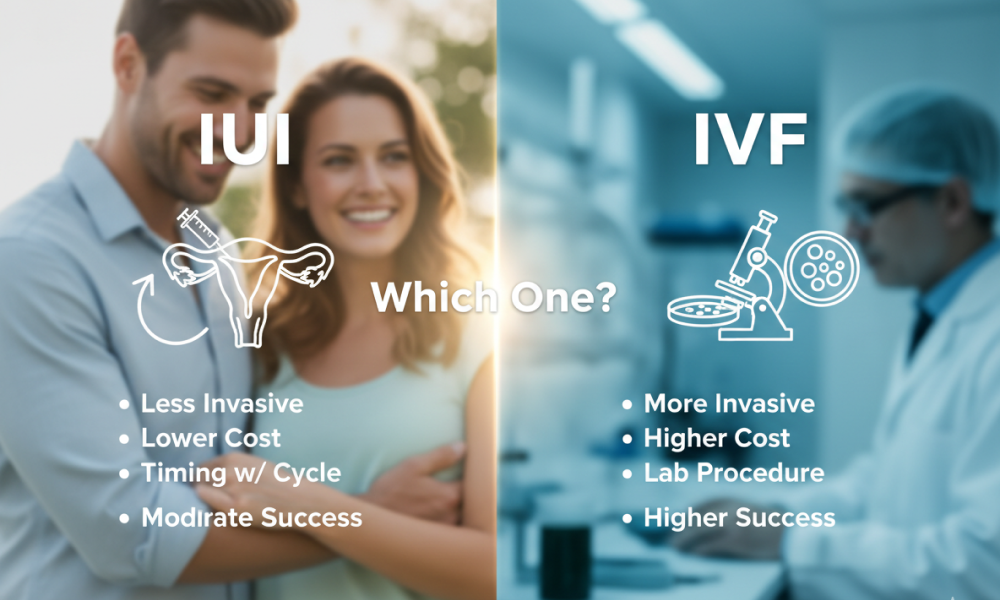
Choosing the right fertility treatment is not always easy, especially when you are already dealing with emotional stress and uncertainty. Many couples feel confused when they first hear about different options, and the comparison of IUI vs IVF often raises more questions than answers. Both treatments can help you conceive, but they work in very different ways and are suited for different situations.
Understanding your options clearly can reduce anxiety and help you make a confident decision. Instead of guessing or relying on incomplete information, it is important to know how each treatment works, what results you can expect, and which one fits your condition.
In this guide, you will learn the difference between IUI and IVF, their success rates, and how to choose the right path based on your needs.
What Is IUI and How Does It Work?
IUI, or intrauterine insemination, is a simple fertility treatment where sperm is placed directly into the uterus during ovulation. This increases the chances of fertilization by reducing the distance sperm needs to travel. The procedure is quick, does not require surgery, and is usually completed within a short clinic visit.
Doctors often recommend IUI for couples with mild fertility issues. These may include low sperm motility, irregular ovulation, or unexplained infertility. Because it is less invasive and more affordable, many couples start their journey here before exploring other treatments.
When comparing IUI vs IVF, IUI is usually seen as the first step. However, it is important to understand that its success rates are lower, and it may require multiple attempts before achieving pregnancy.
What Is IVF and How Does It Work
IVF, or in vitro fertilization, is a more advanced fertility treatment that involves fertilizing eggs and sperm outside the body. The embryos are then carefully developed, and one is transferred into the uterus. This process allows doctors to monitor each stage closely and improve the chances of success.
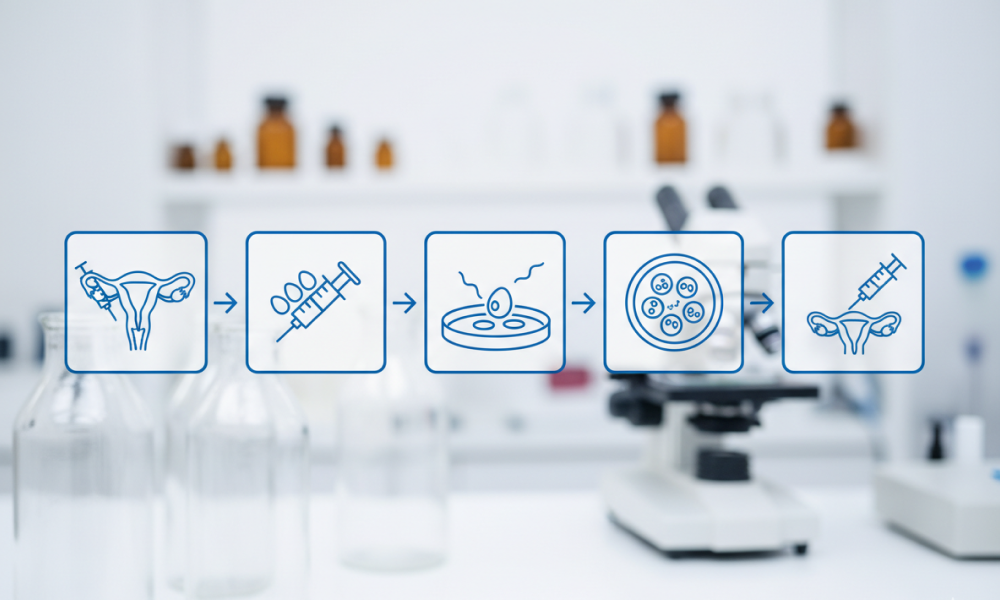
The treatment includes several steps such as ovarian stimulation, egg retrieval, fertilization, and embryo transfer. Each phase is planned carefully to achieve the best possible outcome. If you want to understand the complete process in detail, you can explore the full IVF treatment journey to see how everything works step by step.
Compared to IUI, IVF is more complex and requires more time and medical involvement. However, it is often recommended when fertility issues are more serious or when other treatments have not worked. This is why discussions around IUI vs IVF often depend on individual health conditions.
IUI vs IVF Key Differences
Understanding the difference between IUI and IVF is essential when choosing the right treatment. Both methods aim to help with pregnancy, but they differ in how they are performed, how long they take, and how successful they are.
IUI is a simple procedure that works within the body, while IVF involves fertilization in a controlled lab environment. This makes IVF more precise but also more intensive. The level of monitoring, medication, and medical involvement is much higher in IVF compared to IUI.
Here is a simple comparison to help you understand:
- IUI is less invasive and quicker
- IVF involves multiple steps and takes longer
- IUI is more affordable
- IVF has higher success rates
- IUI may require repeated cycles
This comparison clearly explains the difference between IUI and IVF and helps answer common concerns in a simple way.
Success Rates of IUI vs IVF
Success rates are one of the biggest reasons people compare IUI vs IVF. IUI usually has a success rate between 10 and 20 percent per cycle. This depends on factors such as age, overall health, and the cause of infertility. IVF offers higher success rates, often ranging between 40 and 60 percent. Because of this, many couples start asking an important question: Is IVF better than IUI for their situation? In many cases, IVF provides faster and more reliable results, especially when fewer cycles are needed to achieve pregnancy.
Another important factor to consider is time. The IVF process follows a structured schedule that usually takes a few weeks from start to finish. Understanding the IVF cycle timeline can help you plan better and feel more prepared during each stage of treatment. Age also plays a major role in success. Younger individuals tend to have better outcomes with both treatments, but IVF still offers stronger chances when fertility challenges are more complex or long-standing.
When Should You Choose IUI
IUI is a good option when fertility issues are mild and manageable. It is often recommended as a first step because it is simple, less expensive, and less physically demanding. You may choose IUI if your doctor identifies minor issues such as ovulation problems or mild sperm concerns. It allows you to try a natural approach with some medical support before moving to more advanced treatments. For many couples, the journey begins here before they start seriously deciding between IUI and IVF based on results and medical advice.

When Should You Choose IVF
IVF becomes the better option when fertility challenges are more serious or when IUI has not been successful. It is especially helpful in cases where natural fertilization is difficult or unlikely. You may need IVF if you have blocked fallopian tubes, severe male infertility, or age-related fertility decline. It is also recommended if multiple IUI cycles have failed to produce results. At this stage, couples often feel more confident in deciding between IUI and IVF based on higher success rates and better control over the process.
IUI vs IVF Cost Comparison
Cost is an important factor when choosing between treatments. IUI is more affordable and can be repeated multiple times without a major financial burden. This makes it a practical choice for many couples at the beginning of their journey.
IVF is more expensive because it involves advanced procedures, lab work, and continuous monitoring. However, IVF may reduce the number of cycles needed to achieve pregnancy, which can save time and emotional energy. When comparing IUI vs IVF, it is important to think beyond initial costs and consider long-term results and success rates.
Pros and Cons of IUI vs IVF
Both treatments have their advantages and limitations, and understanding them can help you make a better decision. IUI is simple, quick, and less stressful, but it has lower success rates and may require multiple attempts. IVF, on the other hand, offers higher success and works well for complex cases, but it involves more time, cost, and emotional commitment.
This comparison often leads to the question, "Is IVF better than IUI." The answer depends on your individual condition, as both treatments serve different purposes in fertility care.
Which One Is Right for You
Choosing the right treatment depends on your health condition, age, and personal goals. There is no single answer that works for everyone, which is why professional guidance is important.
If your fertility issues are mild, starting with IUI may be the right approach. If your condition is more complex or you want faster results, IVF may be a better option. Understanding the process and what each treatment involves can help you prepare better and manage your expectations.
Getting proper medical advice and emotional fertility treatment support can make your journey easier and less stressful. With the right support, you can move forward with confidence and clarity.
Conclusion
Making the right choice between IUI and IVF can feel overwhelming, especially when every decision matters so much. Both options offer hope, but the best choice depends on your unique situation, your body, and how your fertility journey is progressing.
IUI can be a good starting point if your condition is mild and you want a simpler approach. IVF, on the other hand, gives higher success rates and is often the better option when challenges are more complex or time is limited. Understanding these differences helps you move forward with more clarity instead of confusion.
If you still feel unsure, you do not have to figure it out alone. At Doctor Hanna, you can get expert guidance, personalized care, and real support throughout your journey. With the right direction and care, this path can feel more manageable, hopeful, and clear.
FAQs
Is IVF better than IUI?
IVF is generally more successful than IUI, especially for complex fertility issues.
How many IUI cycles should I try before IVF?
Doctors usually recommend trying 3 to 4 IUI cycles before moving to IVF.
Is IUI safer than IVF?
Both treatments are safe, but IUI is less invasive and simpler.
Can IUI work after failed IVF?
It depends on the reason IVF failed, but your doctor can guide you based on your situation.
Which is more painful, IUI or IVF?
IUI is usually painless, while IVF may involve mild discomfort during some stages.