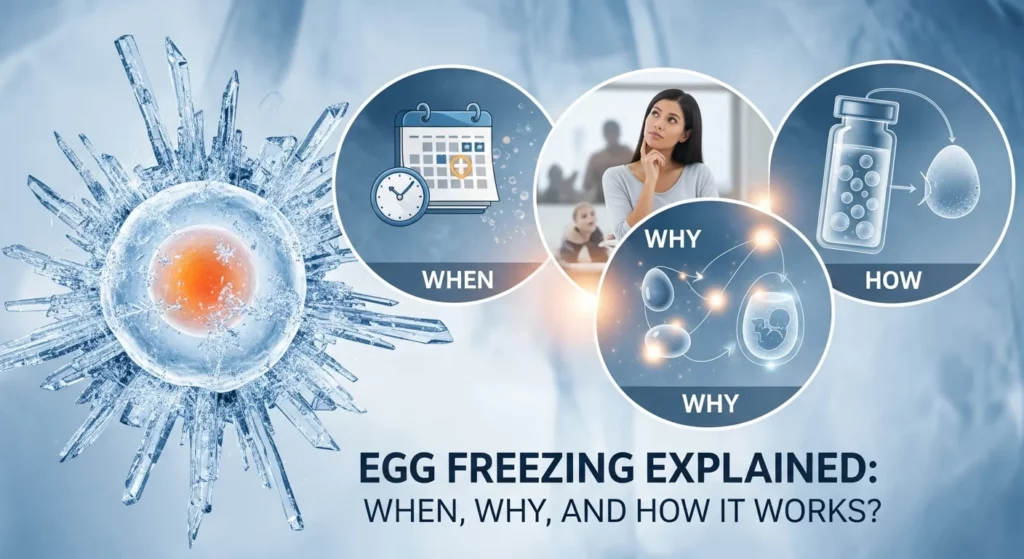
Egg freezing has become a practical option for many people who want more control over their future plans. Some feel they are not ready for pregnancy now. Others deal with medical issues that may affect fertility later. Whatever the reason, egg freezing offers a way to keep the possibility of having a child open for the future. This guide explains when to consider egg freezing, why people choose it, and how the entire journey works from start to finish.
What Egg Freezing Is and How It Helps Preserve Fertility?
Egg freezing gives people a chance to store their eggs at an younger and healthier stage of life. Once frozen, the eggs remain the same age as the day they were collected. This helps protect fertility for later years. Doctors often recommend it for women freezing eggs who want more time before starting a family or face medical treatments that may impact fertility.
The science behind a human female frozen egg is simple. The egg is cooled so fast that ice crystals cannot form. This protects the structure of the cell and allows it to last for many years in storage.
When Egg Freezing Makes Sense and Who May Benefit Most?
Some people look into the egg freezing process in their late twenties or early thirties. Egg quality is generally better at these ages. But every person is different. Health history, fertility tests, and personal goals also guide the timing.
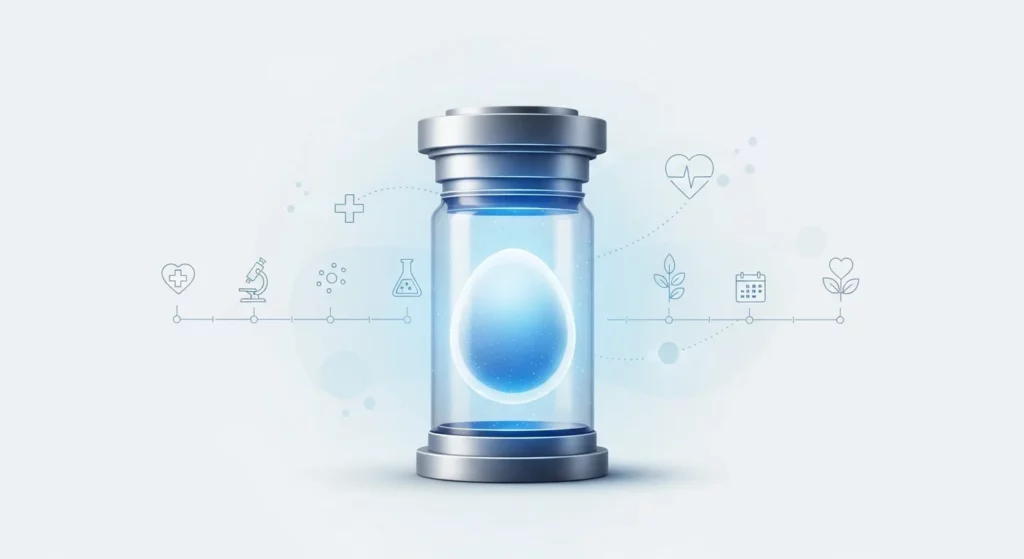
Women freezing eggs sometimes choose this option because of upcoming medical treatments. Others want to focus on personal or career goals before starting a family. A human female frozen egg stored in a safe environment can help reduce the pressure to rush fertility decisions.
People with a low egg count may also consider the egg freezing procedure early. In this case, understanding the IVF cycle timeline can help with planning. Seeing how IVF works later can make the decision clearer and more confident.
Why People Choose Egg Freezing for Personal and Medical Reasons?
Many people feel they are not ready to become parents yet. They may want stability, a partner, financial comfort, or time to explore life before taking on the role of raising a child. Egg freezing gives them room to breathe and think clearly.
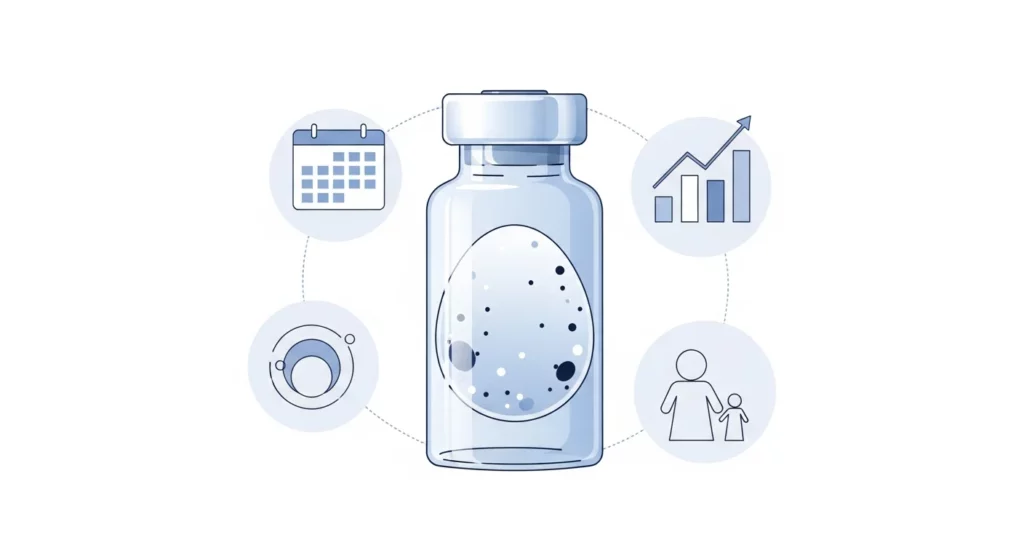
Some choose it for medical reasons. Chemotherapy, surgeries, or certain illnesses can reduce fertility. Women freezing eggs before treatment is often suggested by doctors as a way to protect future options. Holding a human female frozen egg in storage helps keep a sense of choice even during difficult medical journeys.
Others choose egg freezing simply for peace of mind. It does not promise pregnancy later, but it offers a chance they might not have otherwise.
Egg Freezing Process Works Step by Step
The egg freezing process takes a few weeks. It involves tests, hormone medication, monitoring, the egg retrieval, and freezing step. Even though it sounds like a lot, most people handle it well with regular support from the fertility clinic.
-
Initial Consultation and Fertility Tests
The first visit includes a simple health check. Blood tests measure hormone levels. An ultrasound looks at the ovaries. The doctor checks how many eggs may be available. This helps build a plan that fits the person’s body and needs. -
Ovarian Stimulation and Hormone Medication
Next, hormone injections help the ovaries grow several eggs at once. Clinics monitor progress through blood tests and ultrasounds. Most people continue normal routines during this stage. This step is essential because the egg freezing process works best when several eggs can be collected at the same time. -
Preparing for the Egg Retrieval
When the eggs are nearly ready, the clinic gives a final medication to help them mature. Timing is very important here. It prepares the eggs for the upcoming egg freezing procedure and ensures they can be collected safely. -
Egg Retrieval
The egg retrieval is short and simple. People usually rest at the clinic for a short time afterward. Doctors use light anesthesia, so the person is comfortable. A thin device collects the eggs from the ovaries. The entire egg freezing procedure often takes less than half an hour. -
How Eggs Are Frozen and Stored?
Once collected, the eggs go through a fast cooling method. This protects them from damage. This is how a human female frozen egg stays safe in storage for years. Clinics keep them in special tanks that remain at stable temperatures until someone decides to use them in the future.
What to Expect After the Procedure and Normal Recovery?
Recovery after the egg freezing procedure is usually quick. Some people feel mild discomfort, bloating, or tiredness. Most return to normal routines within a day or two. Follow-up appointments help the clinic confirm that everything went well. Clinics also discuss how many eggs were frozen and how storage works going forward.
How Do Frozen Eggs Perform Later?
Success depends on age, egg quality, and health. Younger eggs often lead to better results. This is one reason women freezing eggs earlier may have an advantage. But every person is unique.
The egg freezing process does not guarantee pregnancy. It simply gives a better chance later compared to trying with older eggs. When the time comes to use them, the eggs are thawed, fertilized, and placed into the uterus as part of IVF.
Possible Risks and What You Should Know About Safety
Most people experience mild symptoms. Serious risks are rare. Clinics monitor hormone levels closely to prevent complications. Long-term studies show that egg freezing is considered safe. A frozen egg does not harm future pregnancy outcomes. The human female frozen egg is stored under strict standards designed to protect the cell at every step.
Costs and What Usually Comes With the Treatment?
Costs depend on the clinic and location. They usually include tests, medication, monitoring, retrieval, and storage. Some people add future costs to their planning, such as IVF or thawing. If someone has a low egg count, the clinic may suggest more than one round. In those cases, some look into options for low ovarian reserve treatment to help support the process.
Who Egg Freezing May Be Right For and Who May Need Other Options?
Egg freezing can help people who want more time. It can also help those facing medical treatments that may affect fertility. But it may not be right for everyone. Those with very low egg numbers may need other approaches. Others may prefer embryo freezing or different fertility plans recommended by a doctor.
Conclusion
Egg freezing gives many people a sense of time and choice. It cannot promise a future pregnancy, but it protects an opportunity that might be harder to reach later. With the right information and support, egg freezing can be a helpful step for those who want flexibility in their fertility plans. Understanding the egg freezing process and how the egg freezing procedure fits into long-term planning makes the journey clearer. For many, egg freezing offers comfort, control, and a practical way to keep future options open.